

























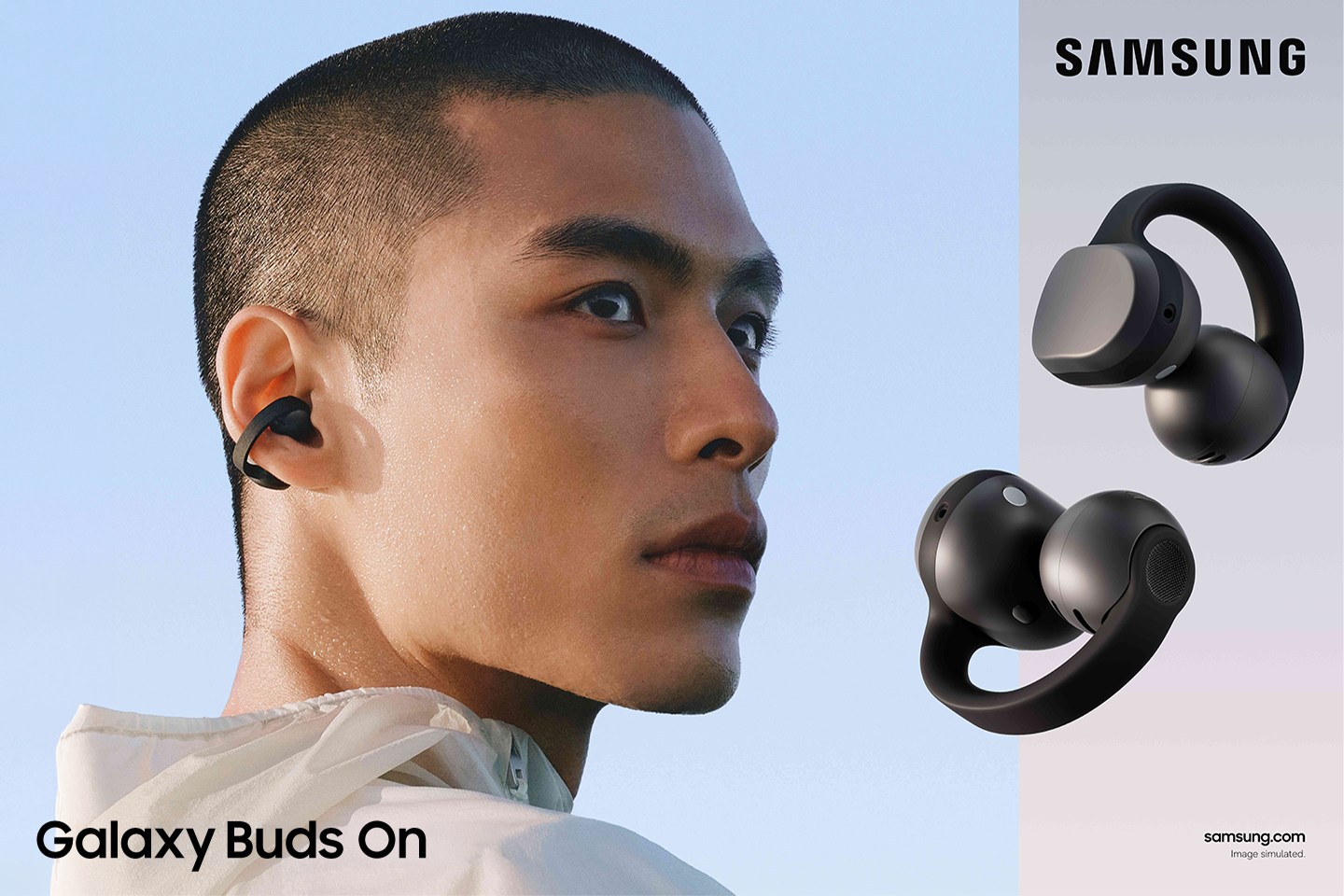
Samsung has put a US price on its clip-on earbuds. Galaxy Buds On will sell for $229 in Black, “beginning early November 2026.” The company said so in an October 28 announcement carrying a Seoul dateline. The buds clip around the ear rather than sealing the canal. Ambient sound keeps coming through while your audio plays.
Samsung announced the earbuds in its home market first. We covered that launch on October 1. This announcement brings the clip-on model to US buyers, although Samsung has not given an exact on-sale date or a pre-order window in the release.
An open-ear alternative
Samsung positions Buds On as an alternative for situations where you want to hear your surroundings. Its release contrasts that with in-ear Galaxy Buds4 Pro for focus and noise cancellation. The Buds On specifications do not list active noise cancellation.
For comparison, Bose’s open-ear designs also leave the ear canal open. Buds On follows that approach with a band that clips around the ear.
A 6.65-gram clip
Each earbud weighs 6.65 grams. The charging case, meanwhile, weighs 41 grams. Samsung says it drew on “more than 119 million ear data points.” It used AI-assisted optimizations and physics simulations to tune the band across a range of ear shapes. Samsung designed that band to balance a secure fit against all-day comfort.
What Buds On does have is Audio Leakage Reduction. Samsung says it cuts escaping sound “before it travels outward by projecting reversed sound waves.” The stated goal is keeping your audio more private to you. In other words, that is leakage control aimed at the people near you, not isolation for you. Samsung’s own hands-on post attaches the obvious caveat.
Due to the design, some sound may leak depending on the playback volume, ear shape, and ambient noise levels. Sound leakage may be more noticeable in quiet environments.
Water resistance splits in two. The earbuds carry an IP54 rating. Samsung calls that dust resistant. It tested the buds for freshwater splashes from any direction, for up to five minutes. Even so, it advises against beach or pool use. The charging case, by contrast, has no water resistance at all.
Battery figures, and the fine print
Samsung rates Galaxy Buds On at up to 9.5 hours of music playback per charge. The case lifts that to up to 38 hours in total. Samsung lists talk time at up to 5.5 hours, or 25 hours with the case. Those “up to” numbers come from Samsung’s own internal testing. It ran that testing on pre-production units, and notes actual battery life may vary. Typical capacity is 61 mAh per earbud and 530 mAh in the case. By contrast, the US specifications do not give charging times or list wireless charging.
An 11.3 mm TwinBoost speaker drives each bud, alongside a high-efficiency Class-D amplifier. The earbuds use the Snapdragon S7 Gen 1 Sound Platform. Samsung credits the amplifier’s efficiency for sustaining long playback at higher volume. Connectivity is Bluetooth 6.2. In addition, codec support covers SSC, SSC UHQ, AAC, SBC and LC3.
Clear calls and head gestures
Intelligent Clear Call combines three microphones with a Voice Pickup Unit. The VPU is a vibration sensor that registers speech through bone and skin movement. Samsung pairs that with a machine-learning call solution trained on ambient sounds such as car horns and construction noise. However, the feature requires initial setup through settings or the Samsung Wear app on a compatible Galaxy device.
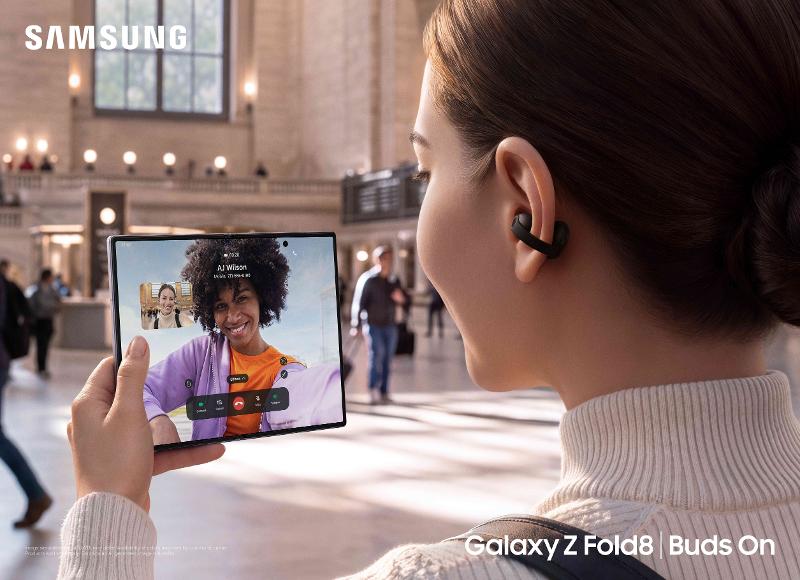
Head Gestures is the headline convenience feature. Nod to accept a call, shake to decline. The same gestures later dismiss alarms and have notifications read out. However, each of those carries a condition. Head Gestures ship off by default, and need One UI 8.5 or later. Alarm dismissal and notification reading require One UI 9.0 or above. Alarm dismissal works only with Samsung’s Clock, Reminder and Calendar apps. Notification reading covers only apps you have enabled for Galaxy Buds notification reading.
The software strings attached
That same pattern runs through the rest of the feature list. Auto Volume adjusts loudness to your surroundings. It is a Labs feature, though, and it needs One UI 8.5 or above.
For example, Quick Voice Memo starts when you press and hold the back of an earbud. It works only on Galaxy AI supported devices. It needs both the Samsung Voice Recorder and Bixby apps. The press-and-hold gesture also “must be configured separately in Settings.”
Gemini Live answers to “Hey Google, let’s talk live.” It requires a Google Gemini account and an internet connection. Samsung’s footnote limits availability to select devices, languages and countries, and to users 18 and older.
Setup, at least, is light. Samsung scopes that claim to Galaxy users, who need no Galaxy Wearable app install. Opening the cradle connects the buds to a phone or tablet. A Buds shortcut in the Quick Panel then handles volume and EQ. Compatibility runs to Android 12 or higher with more than 1.5 GB of memory. Samsung warns that some features may not work on non-Samsung devices. Availability may also vary by market, operator or connected device.